AI chat
You can ask about:
- Infrastructure investments
- Waterway status (locks closed, alerts…)
- Regulations and opportunities

How digitalization can benefit Italian inland navigation
↓ the sector ↓
The European picture shows a marked shift toward more sustainable, integrated transport systems with a lower impact on logistics costs.
1,1
tonnes of goods per inhabitant are carried on the EU's inland waterways
1%
Italian river traffic accounts for less than 1% of the European total, well below its real potential.
The Padano-Veneta navigable network currently moves 6.4 million tonnes per year. Its actual capacity is at least 10.1 million tonnes per year.
That gap, documented by Confindustria and The European House Ambrosetti, is not only an infrastructure problem but an information problem too.
1
Fragmented information sources
2
Lack
of structured data
3
Lack
of dedicated tools
1 - Complex bureaucratic procedures
Permits that take days or weeks slow down operations and planning.
2 - Infrastructure not aligned with EU standards
Isolated digital tools mean no overall view and fewer opportunities.
3 - Incomplete, unstructured data
Difficulty forecasting risks, costs and operational disruptions.
4 - Information scattered across dozens of sources
More wasted time and lower decision accuracy.
A logistics and commercial potential that businesses and the territory cannot fully exploit today.
A single source of information
No more news scattered across 10 different portals, unfiltered and without alerts
Domain knowledge
Verified, relevant and always up-to-date information
Better planning
Data on investments, opportunities and events
The first information system designed for inland navigation professionals, based only on qualified information verifiable at the source.
I need to know which investments were made in 2025

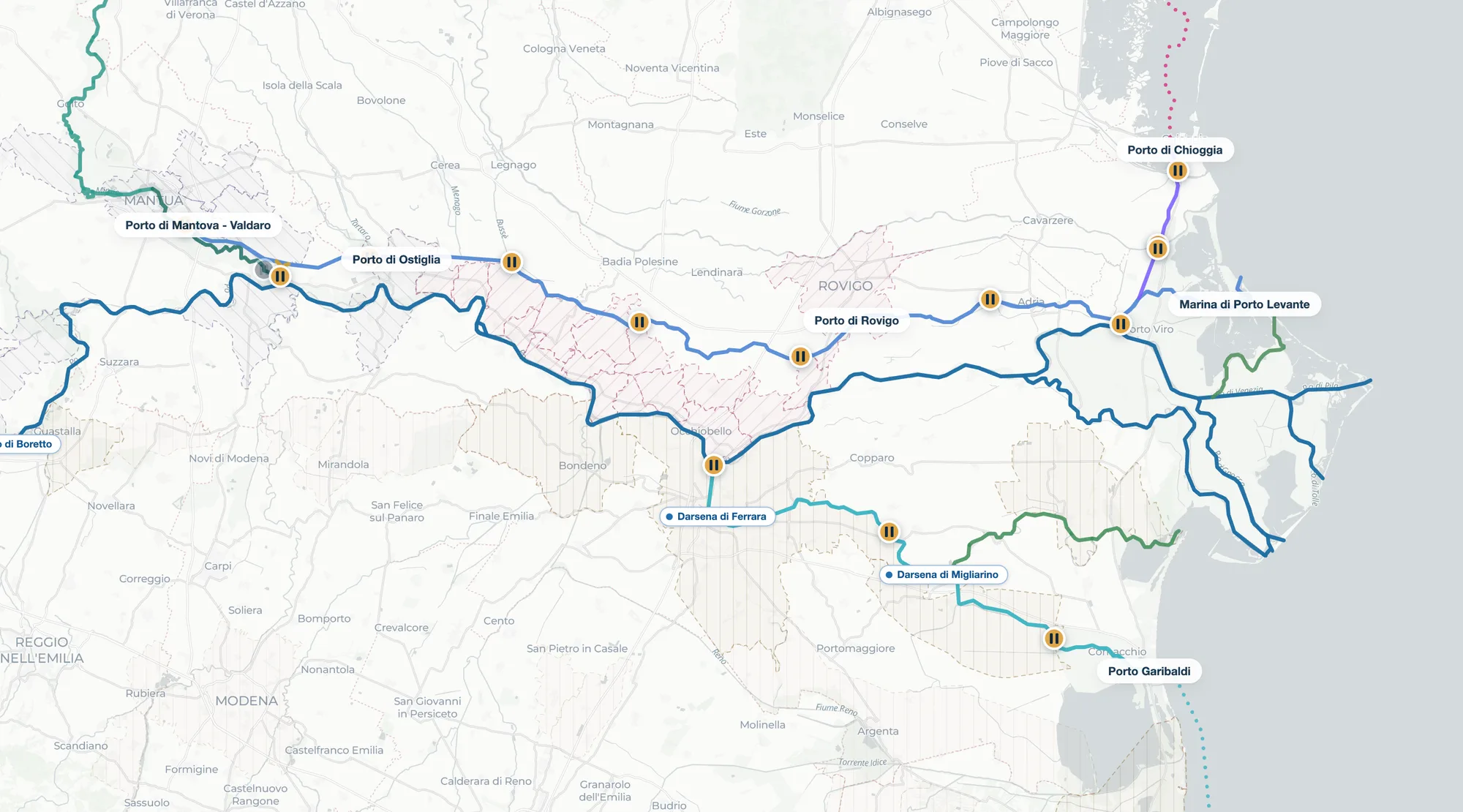
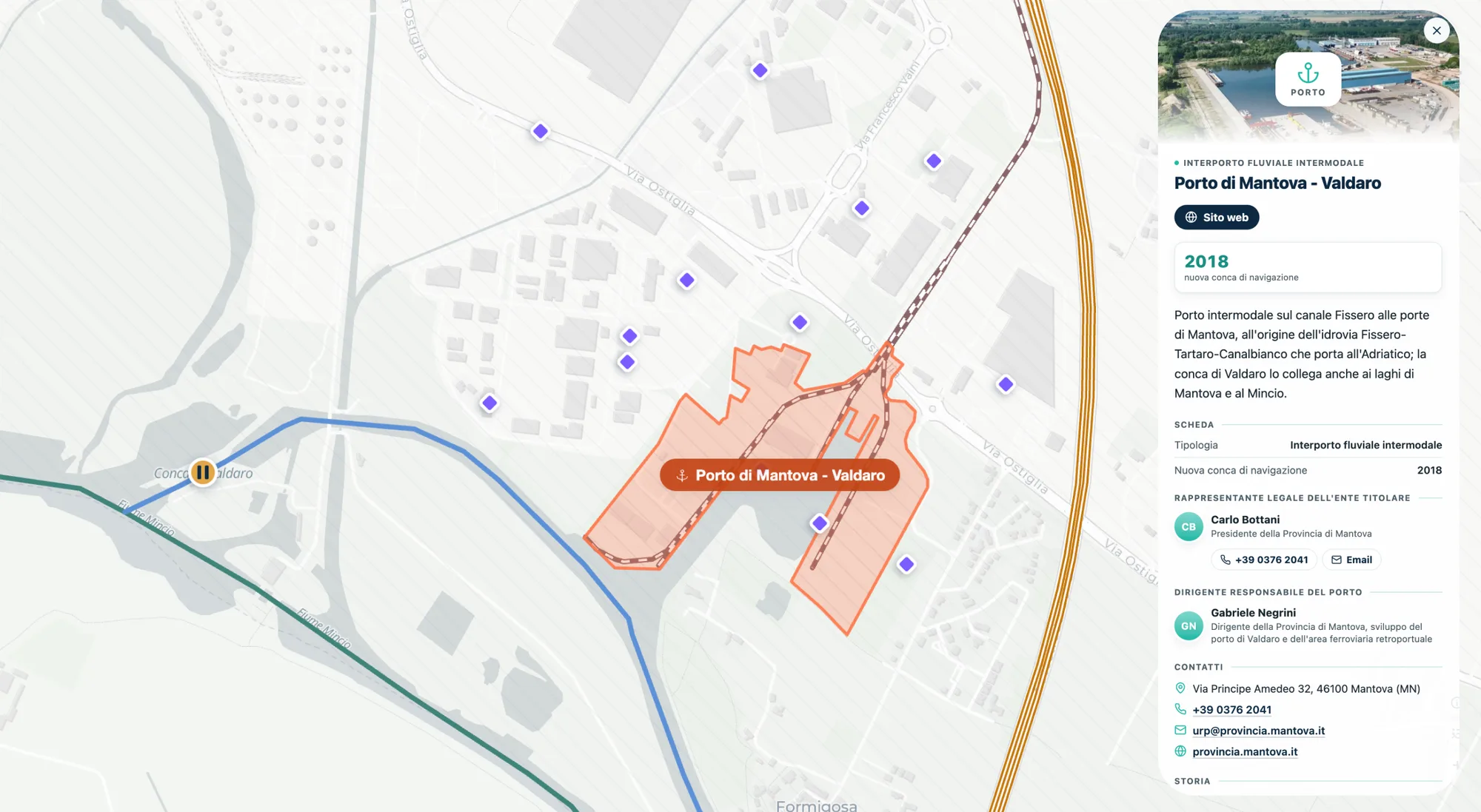
In 2025 the main investments concern the Port of Valdaro and the infrastructure projects funded through the PNRR.
Port of Valdaro: Autostrada del Brennero (A22) allocated 50 million euros to upgrade the port as an intermodal hub.
PNRR: hydraulic works and flood-risk management funded by Next Generation EU, including embankment works and the restoration of hydraulic structures in Lombardy and Piedmont.
Verified sources
powered by
humain soc. coop.